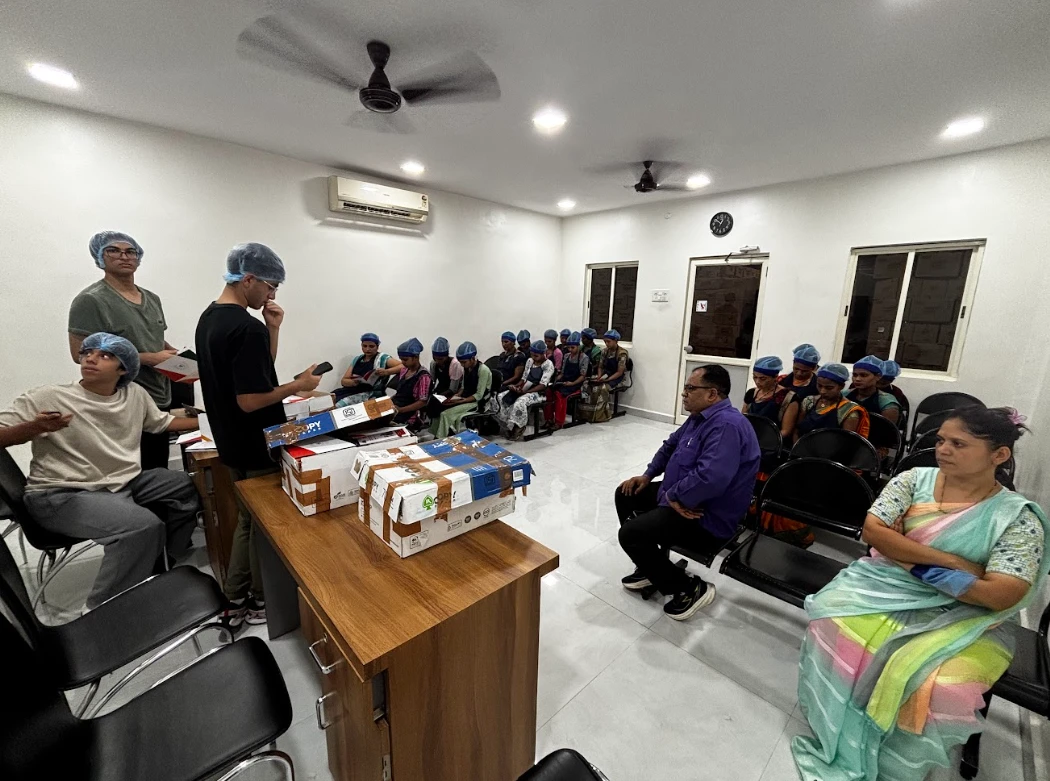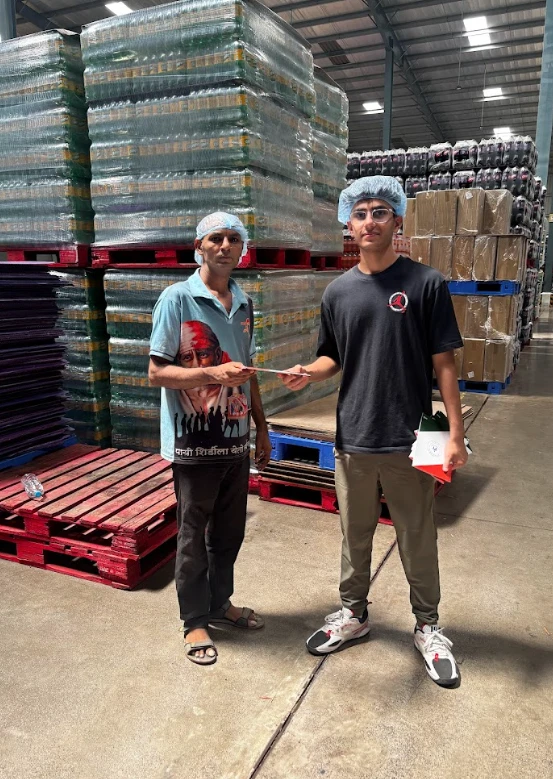
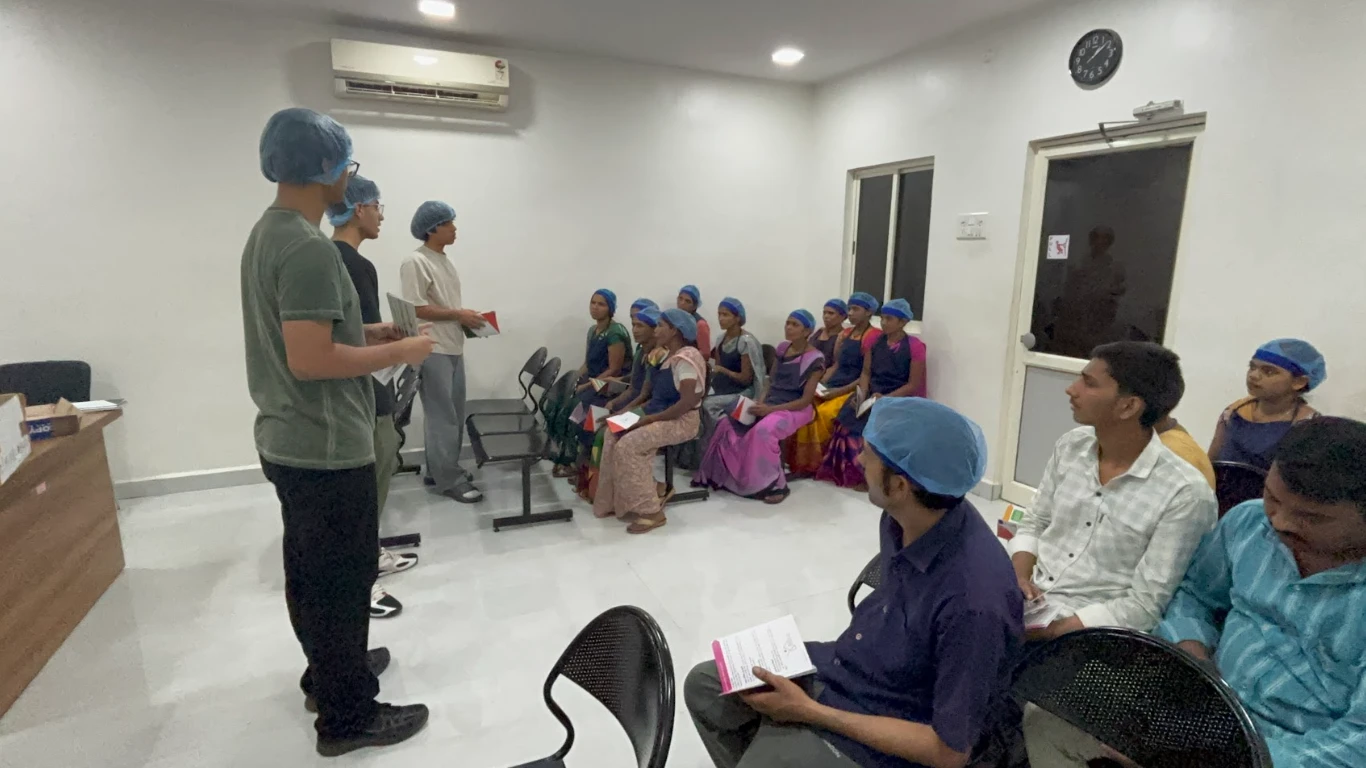
Growing up in India, names like Parle G and Campa Cola are a familiar part of everyday life. But a few days ago, I did not visit their factories to look at the manufacturing process. I went to meet the people who actually keep those production lines moving.
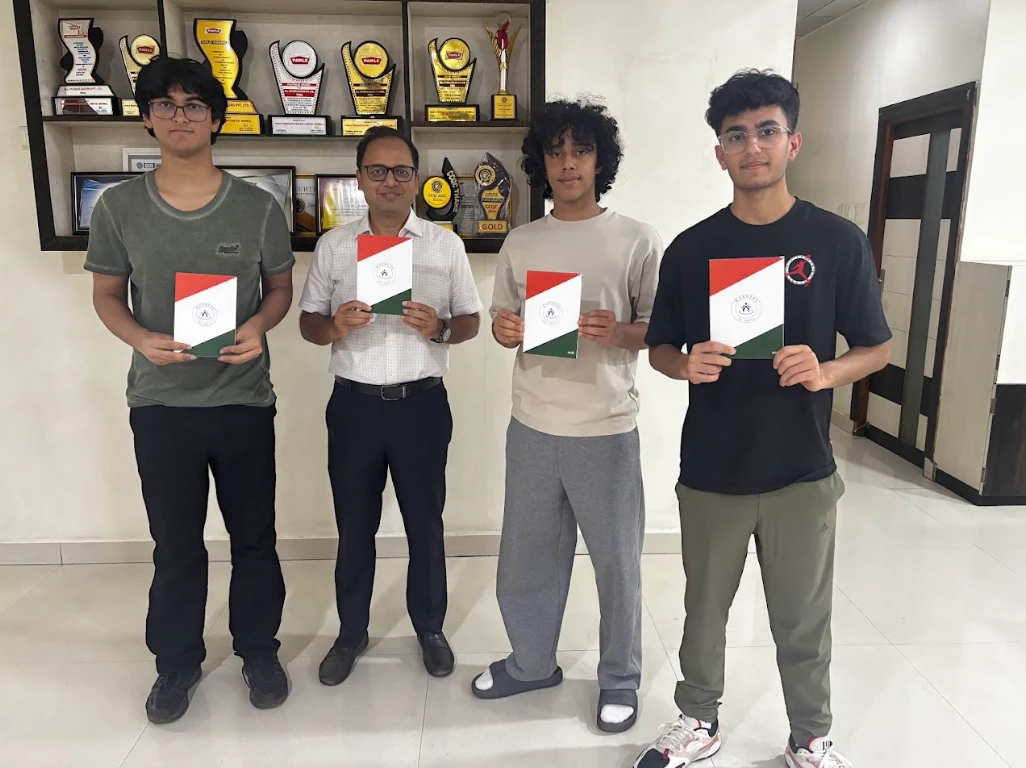
This visit felt different from my previous workshops for one major reason. I was not alone. A couple of my classmates volunteered to accompany me, and having my peers there to support the mission completely shifted the energy of the day. Suddenly, Workers of India felt less like a solo project and more like a shared movement.
Over the course of the visit, our small team interacted with around 200 factory workers. We walked them through the basics of the e-Shram card and distributed our printed booklets. Engaging with so many people at once was intense, but hearing their stories and answering their questions reminded us all exactly why we were there.
However, the most exciting part of the day was putting our newest tool to the ultimate test.
We had the workers pull out their phones and try the newly launched Workers of India AI WhatsApp chatbot. It is one thing to test conversational flows on your laptop at home, tweaking the AI to make sure it works. It is a completely different experience to stand in a bustling factory, watch a worker press the microphone button on WhatsApp, ask a question in Hindi or Marathi, and see the chatbot instantly reply with the exact welfare criteria they need.
Seeing their reactions was incredible. For many of these workers, navigating government websites or reading pages of text is a massive barrier. But talking into their phones? That is something they do every single day. The moment the chatbot responded to their voice notes in their own language, you could see the concept click for them. They realized that understanding their eligibility for government schemes could actually be as simple as sending a quick message.
This visit was a massive reality check and a huge confidence booster for the project. It proved that the technology we built actually holds up in the real world with the exact people it was designed for.
I am incredibly grateful to the management at the factories for giving us the opportunity to connect with their workforce. I also want to give a huge thank you to my classmates who gave up their free time to volunteer, hand out booklets, and help facilitate these conversations.
We reached 200 people in a single day. With the chatbot now in their hands, I am hoping they share it with hundreds more.